I / Independent assurance
Third-party auditing
of frontier AI systems.
Develop and collate audit methods, train assessors, and support independent examinations tied to defined standards and legislative requirements.
A proposed Chicago research institute for AI verification, independent auditing and public policy.
Explore our research agenda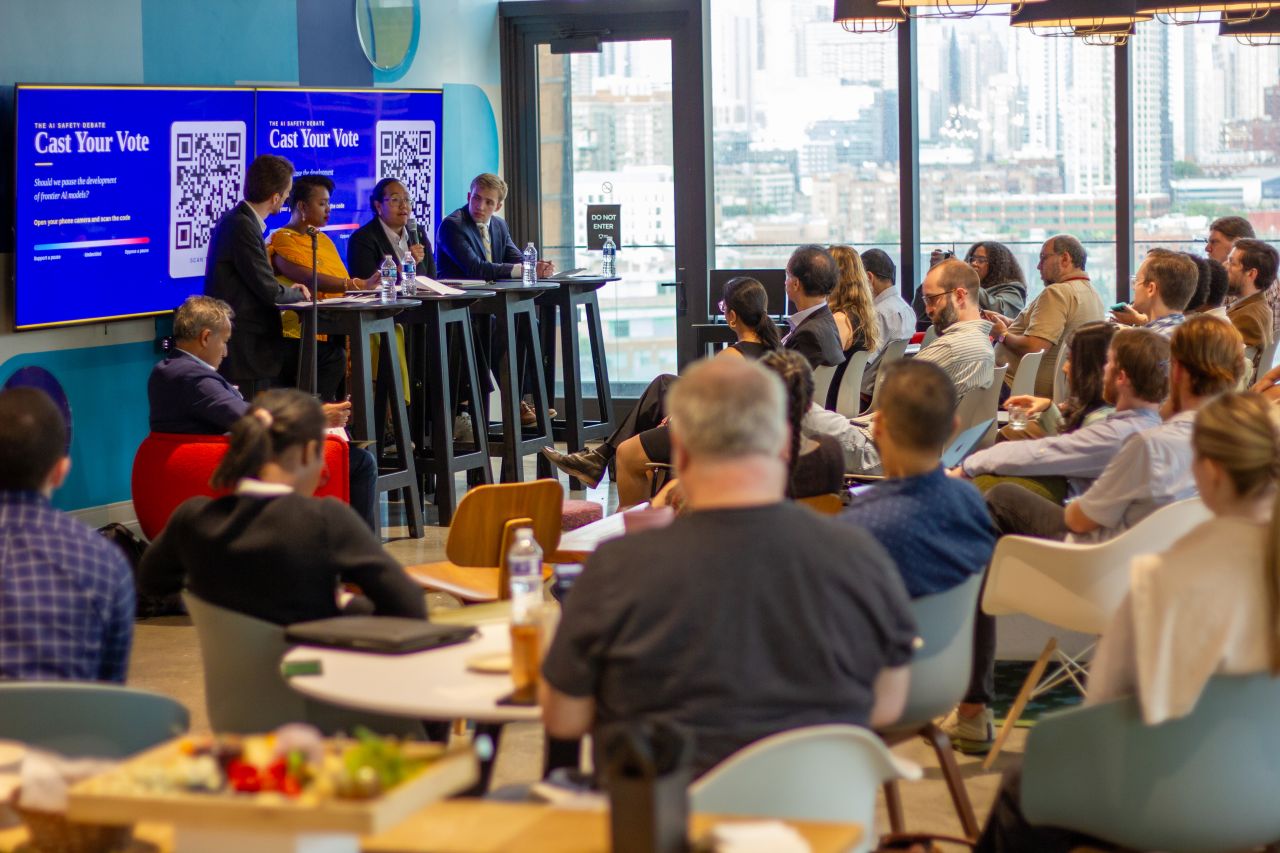
The Institute for the AI Century is a proposed research and policy institute focused on reducing catastrophic and existential risks from advanced AI.
We aim to turn the best technical research and policy proposals into tools, assessment methods and capabilities that governments and other institutions can use.
Our theory of change is straightforward: reliable technical evidence, combined with institutions capable of acting on it, can make AI safeguards more credible and effective.
The pillars and programs below describe our proposed operating model. The institute is in formation.
A research agenda built around the practical foundations of AI safety.
Develop and collate audit methods, train assessors, and support independent examinations tied to defined standards and legislative requirements.
Bring cryptography, hardware, firmware and software expertise together to develop and test practical systems for verifying AI development and compute use.
Translate technical findings and uncertainty into evidence-based briefings, professional education and dialogue across research, government, industry, labor and civil society.
Study how advanced AI changes power, diplomacy, conflict and cooperation among states, companies, communities and increasingly autonomous systems.
Explore the CouncilResident talent, research funding and technical infrastructure, organized around concrete outputs.
A resident research cohort with defined research plans, published working papers and shared technical artifacts.
Tested protocols and prototypes, with evaluations documenting threat models, performance, failure modes and practical limits.
An institute-directed research budget supporting grants, milestone reviews, replication studies and the translation of findings into usable methods.
Audit protocols, evidence requirements, assessor training and pilot examinations under explicit independence safeguards.
Research papers, scenario exercises and working groups on emerging distributions of power and options for institutional cooperation.
Public explainers, professional education and sustained relationships connecting technical work with the people who can act on it.
Advanced AI creates new forms of power—and coordination problems that cross national, corporate and technical boundaries.
The proposed Council would examine how states, firms, communities and autonomous AI systems interact, and what diplomacy, conflict prevention and cooperation could require in this changing landscape.
A dedicated Chicago headquarters would unite resident researchers, fellowship space, verification work and public convening.
Chicago’s research ecosystem connects major universities with Argonne National Laboratory and Fermilab. A wider Midwest network offers opportunities to bring complementary disciplines into the same institution.
We propose a research institute with its own agenda, its own research budget and a permanent place to work—alongside collaborations extending across the region and internationally.
Regional research context: University of Chicago and Chicago Quantum Exchange. Institutions named here are part of the regional ecosystem; partnerships with the institute are to be developed.
Talks, debates, book discussions, meetups and courses that inform the institute’s founding agenda.

5 events shown
 AI Century Events
Compute verification
Paul Wang on cryptographic methods for verifying frontier AI training while protecting confidential information.
AI Century Events
Red Heart
Attendees discussed Max Harms’s novel Red Heart as a scenario for exploring trust, U.S.–China competition and the choices an AGI might make.
AI Century Events
AI 2040 & its critics
A Chicago coffee meetup on the AI Futures Project’s AI 2040 scenario and Richard Ngo’s critique, Selective Optimism.
AI Century Events
Pause frontier AI?
Four debaters argued for and against pausing frontier AI development until governance catches up.
AI Century Events
AGI strategy for government
A five-week course for state and local officials and their staff on how advanced AI could affect public budgets, critical infrastructure, and legislation.
The institute is taking shape in Chicago. Tell us how you’d like to contribute to its research or bring its work to a wider audience.
Express interestFor general inquiries, write to Khullani Abdullahi at khullani@techne.ai.